Tinggalkan Pesan
Jika anda berminat dengan produk kami dan ingin mengetahui lebih lanjut, sila tinggalkan pesanan di sini, kami akan membalas anda secepat mungkin.

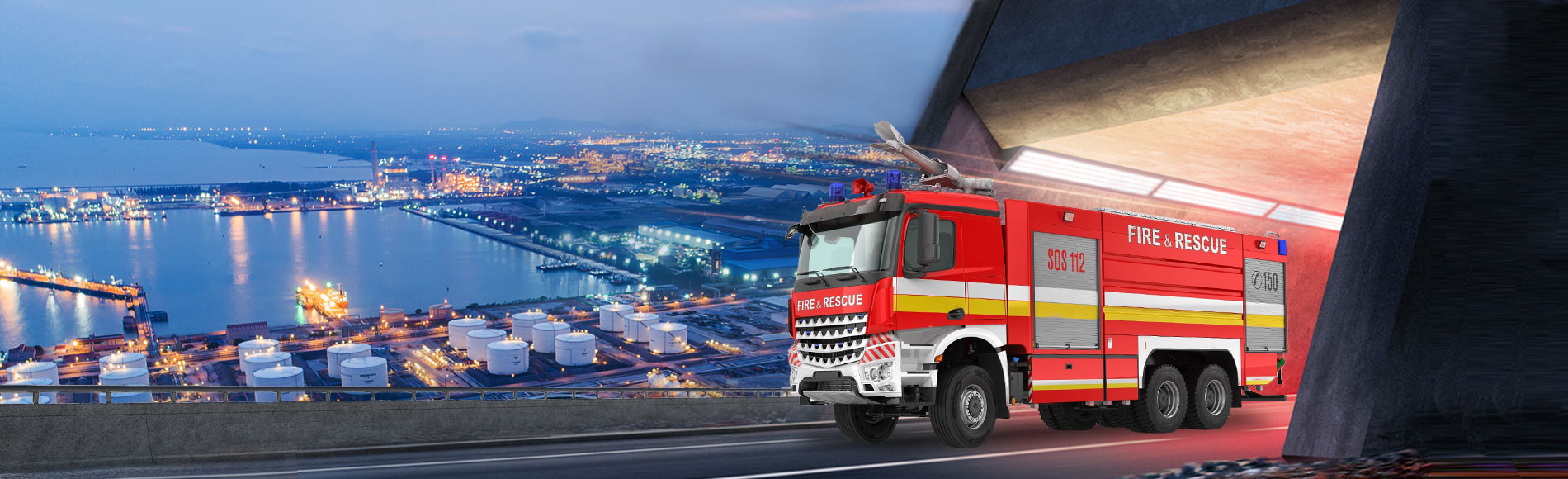
The reliability of a fire truck depends on the maintenance system behind it. Proper operation and responsible use of fire apparatus and specialized firefighting equipment are essential to ensuring that the vehicle performs its function—and directly determine whether a fire truck can complete firefighting and rescue tasks quickly in an emergency. Fire departments worldwide follow structured daily inspection routines to keep vehicles and equipment in a constant state of operational readiness.
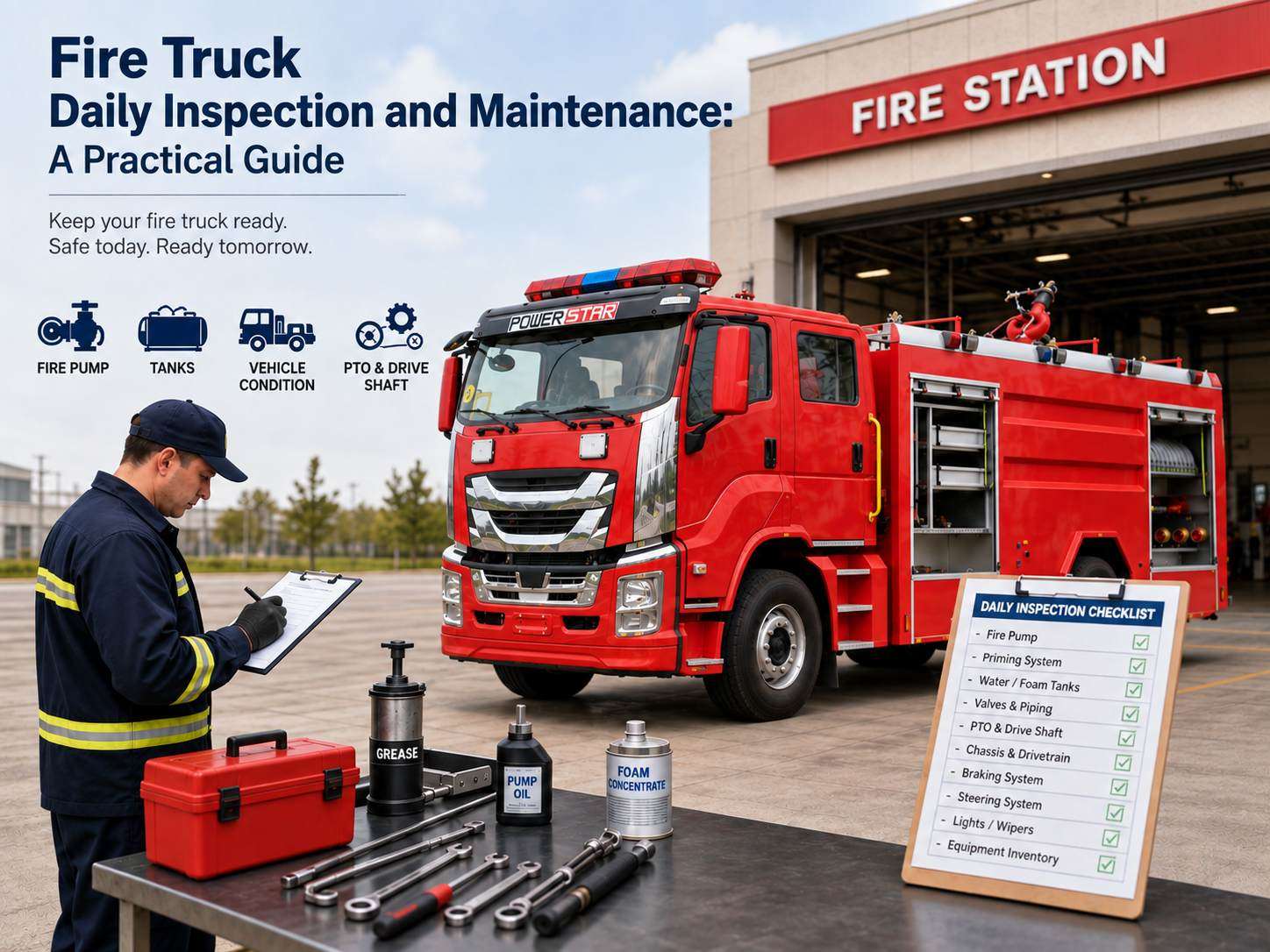
Based on maintenance practices adopted by fire departments and fire apparatus manufacturers, this article focuses on the key areas that require attention during daily inspection and maintenance—specifically the fire pump, water and foam tanks, vehicle condition, PTO, and fire pump drive shaft.
Daily fire truck maintenance focuses on four core areas: the fire pump, the water and foam tanks, the chassis and drivetrain, and the power take-off (PTO) and drive shaft. Key practices include lubricating pump rotating components every 3–6 hours of operation, testing pump performance parameters regularly, flushing tanks and piping after foam use, inspecting chassis fasteners and brake systems, and checking PTO engagement and drive shaft lubrication. Corrosion in tanks and piping is a leading cause of pump impeller damage and foam system failure.
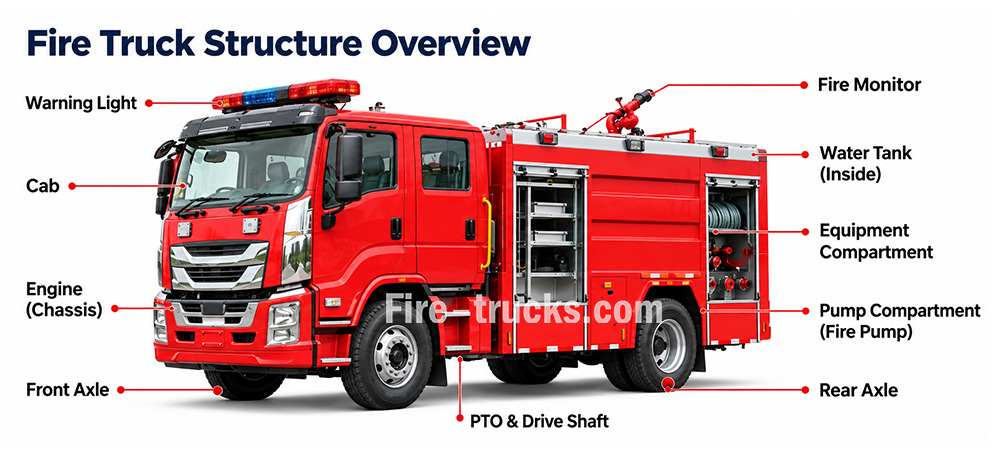
The fire pump is one of the most important components of a fire truck, as it is responsible for delivering water or foam solution to the firefighting system. Its maintenance directly affects the effectiveness of firefighting operations. Inspection and maintenance of the fire pump must therefore be performed with particular care—any fault detected should be addressed immediately.
Daily fire pump maintenance primarily covers the following areas.
1. Lubrication
Rotating components of the fire pump should generally be greased once every 3 to 6 hours of operation.
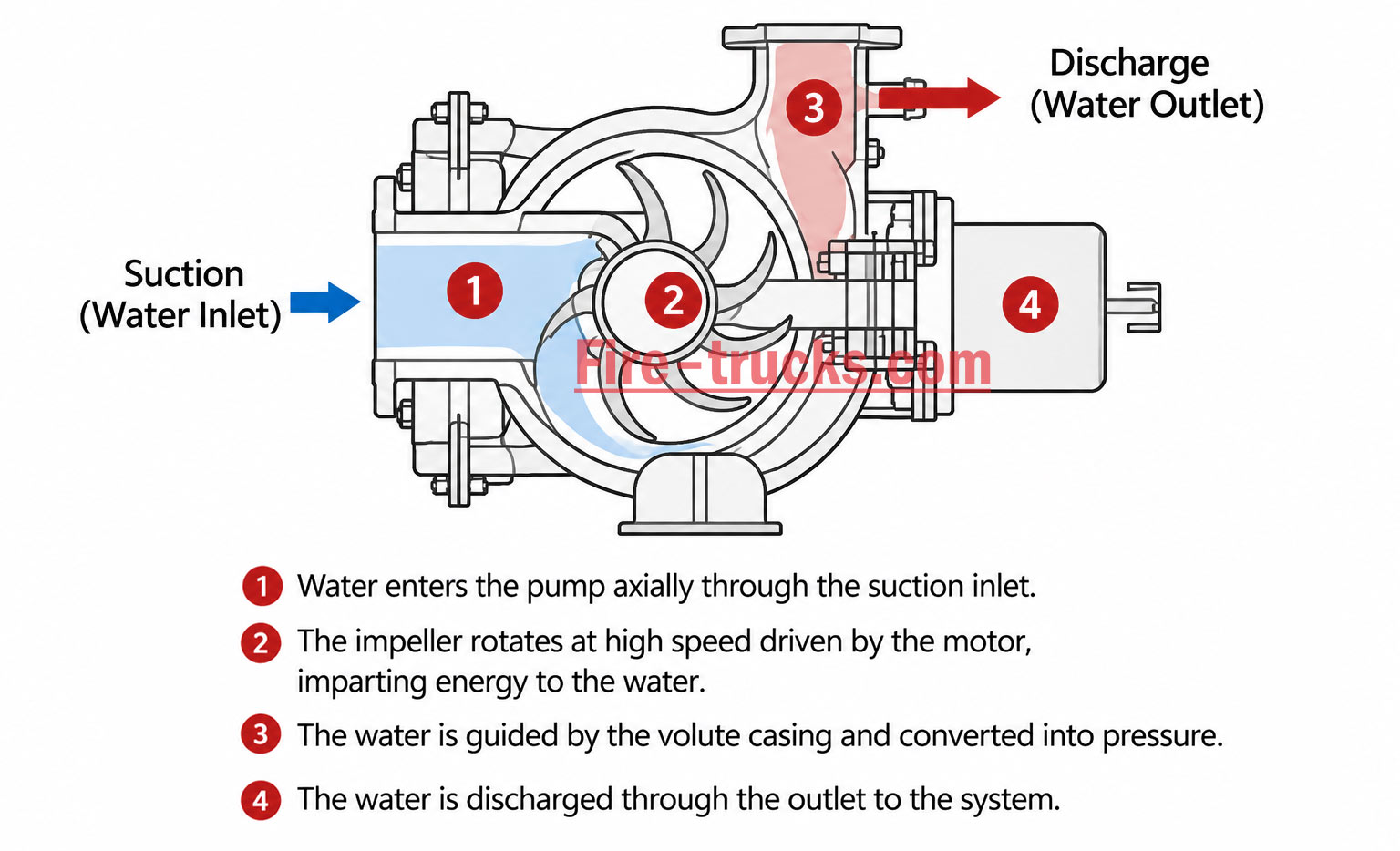
2. Checking fire pump performance
Important operating parameters of the fire pump should be checked regularly, including:
• Maximum suction depth
• Priming time
• Maximum flow rate
• Other specified fire pump performance parameters
If the measured performance differs significantly from the pump's normal operating condition, the cause should be investigated further.
3. Cleaning the fire pump after using an unclean water source
If the fire truck draws water from an unclean or contaminated source, the fire pump, water tank, and piping system should be cleaned after the operation is complete. Contaminants entering the system can affect the normal operation of valves, piping, and internal pump components. This is particularly important for fire trucks that draw from natural sources or other non-municipal water supplies.
4. Flushing the system after foam operations
After using foam for firefighting, the fire pump, foam proportioning system, and connected piping should be cleaned promptly. Foam concentrate and foam solution should not remain in the system for extended periods. Timely cleaning reduces foam residue and lowers the risk of subsequent corrosion or blockage.
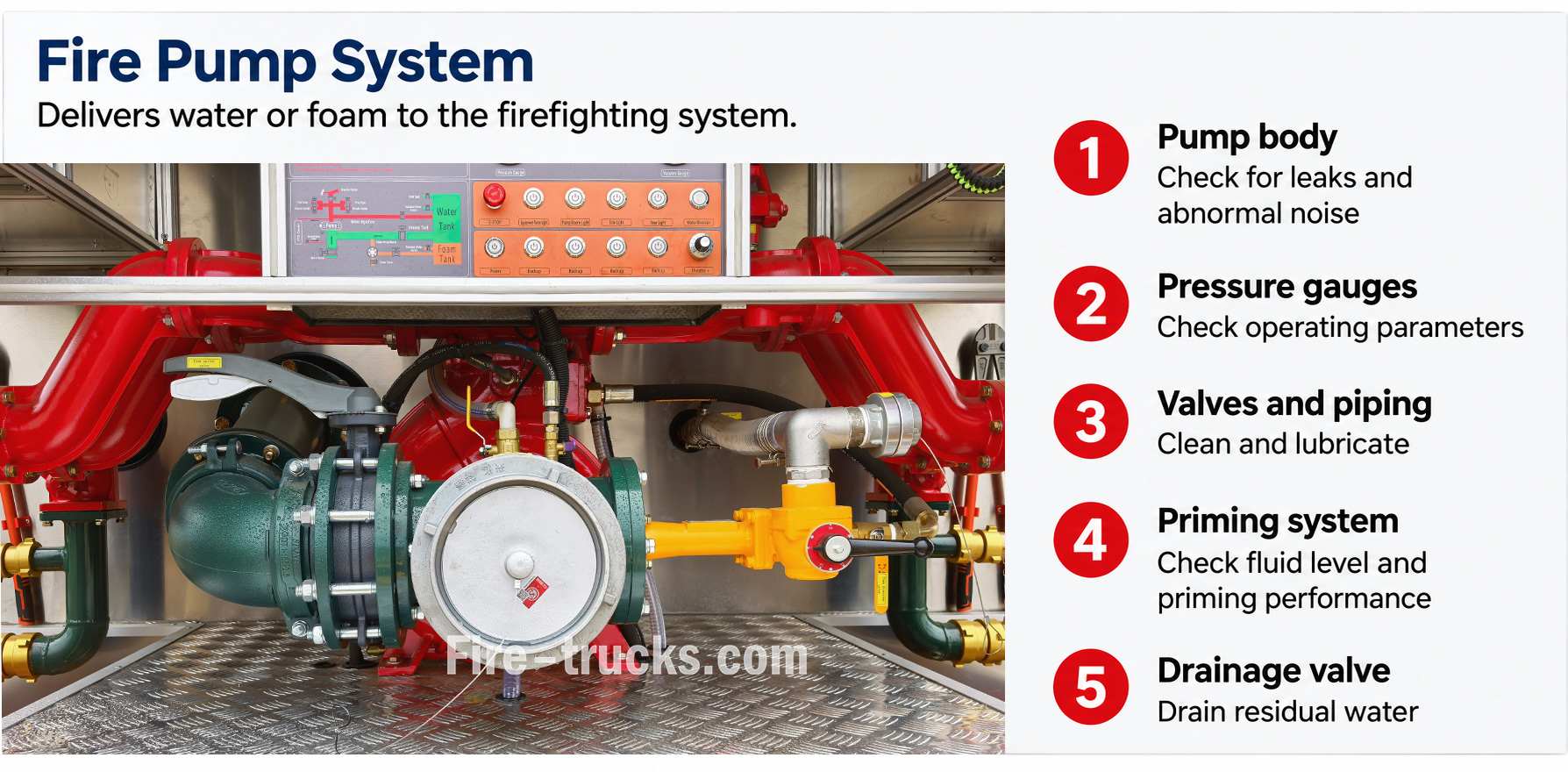
5. Internal draining
Water accumulated inside the pump body and piping must be thoroughly drained, especially in low-temperature conditions.
6. Fluid level checks
The water ring pump priming reservoir, scraper pump oil reservoir, water tank, and foam tank (if equipped) must all be checked, and topped up promptly if levels are insufficient.
7. Valve and monitor maintenance
Inspect the fire monitor or foam ball valve seat, clean moving parts, and apply a small amount of grease for lubrication.
8. Water quality and diverter pump
Clean the water diverter pump promptly and inspect the gearbox oil. If the oil has deteriorated (turned milky white) or is missing, it should be replaced or topped up promptly.
Because water and extinguishing agents may be stored inside the tank for extended periods, the tank and related components can be affected by corrosion and residue over time.
Why fire truck tank inspection matters
Once corrosion spreads inside the tank, rust flakes can break off and be washed into the fire pump when the truck discharges water, striking the impeller and causing wear, imbalance, and ultimately pump failure. For foam fire trucks, the risk is even greater: foam solution is highly corrosive. Neglecting the tank interior not only causes rust but also blocks piping, preventing foam from being delivered at the correct proportion. At a building fire scene, a blocked foam line is a direct operational failure.
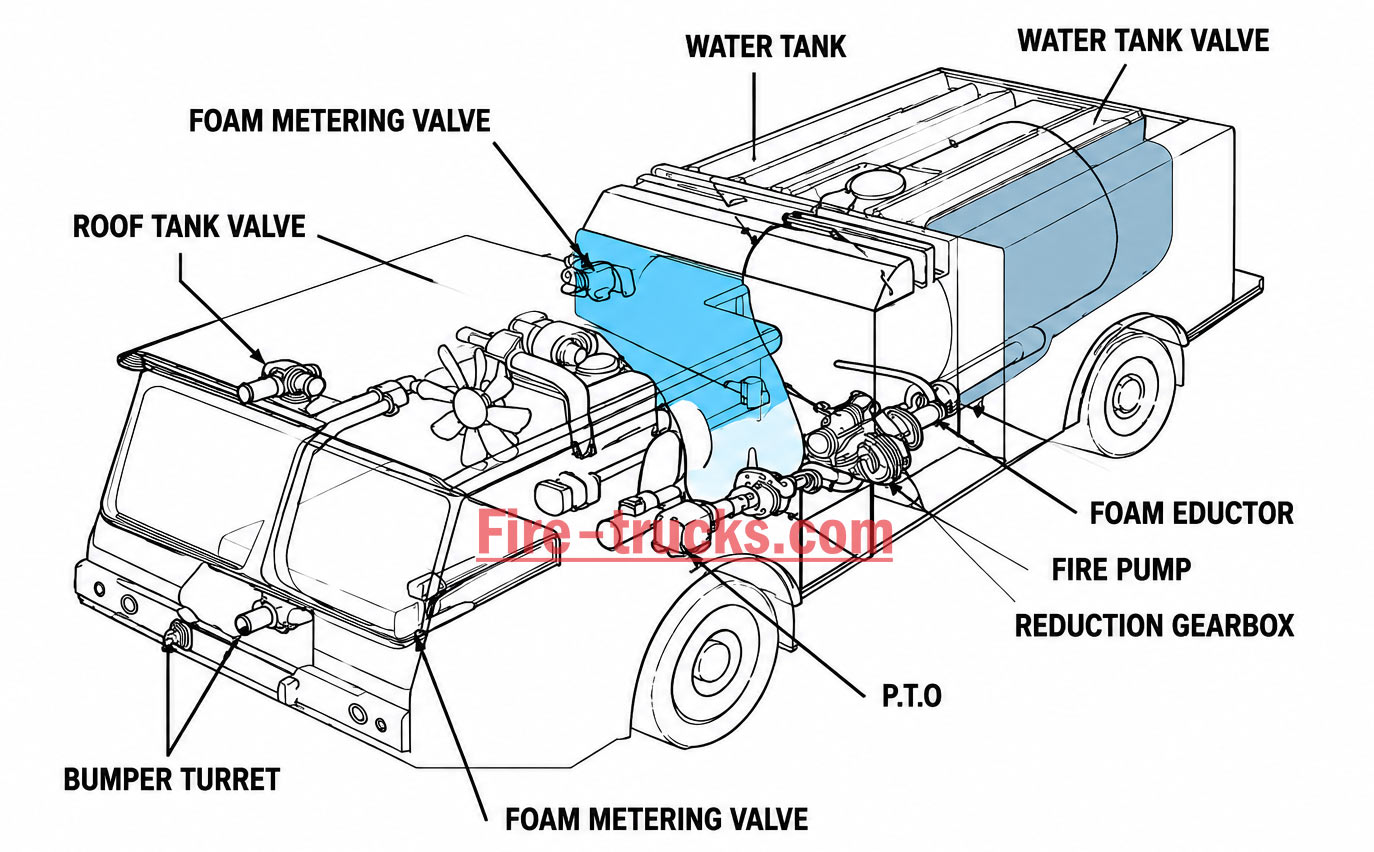
Depending on the location and severity of corrosion, different repair methods may be applied:
• Inspect fire truck tanks regularly and systematically
• Once corrosion is found, take effective measures promptly to prevent rust spots from spreading
• Common treatment methods: clean the rusted area, allow it to dry, then apply composite resin, resin, paint, or repair welding
• Valves and piping components associated with the tank should also be inspected and cleaned regularly, with any problems addressed accordingly
The mechanical condition of the fire truck itself is directly related to firefighting performance and firefighter safety. Fire trucks typically carry large amounts of firefighting equipment and may be driven under high-intensity conditions during emergencies. Both the mechanical systems and safety systems therefore require regular inspection.
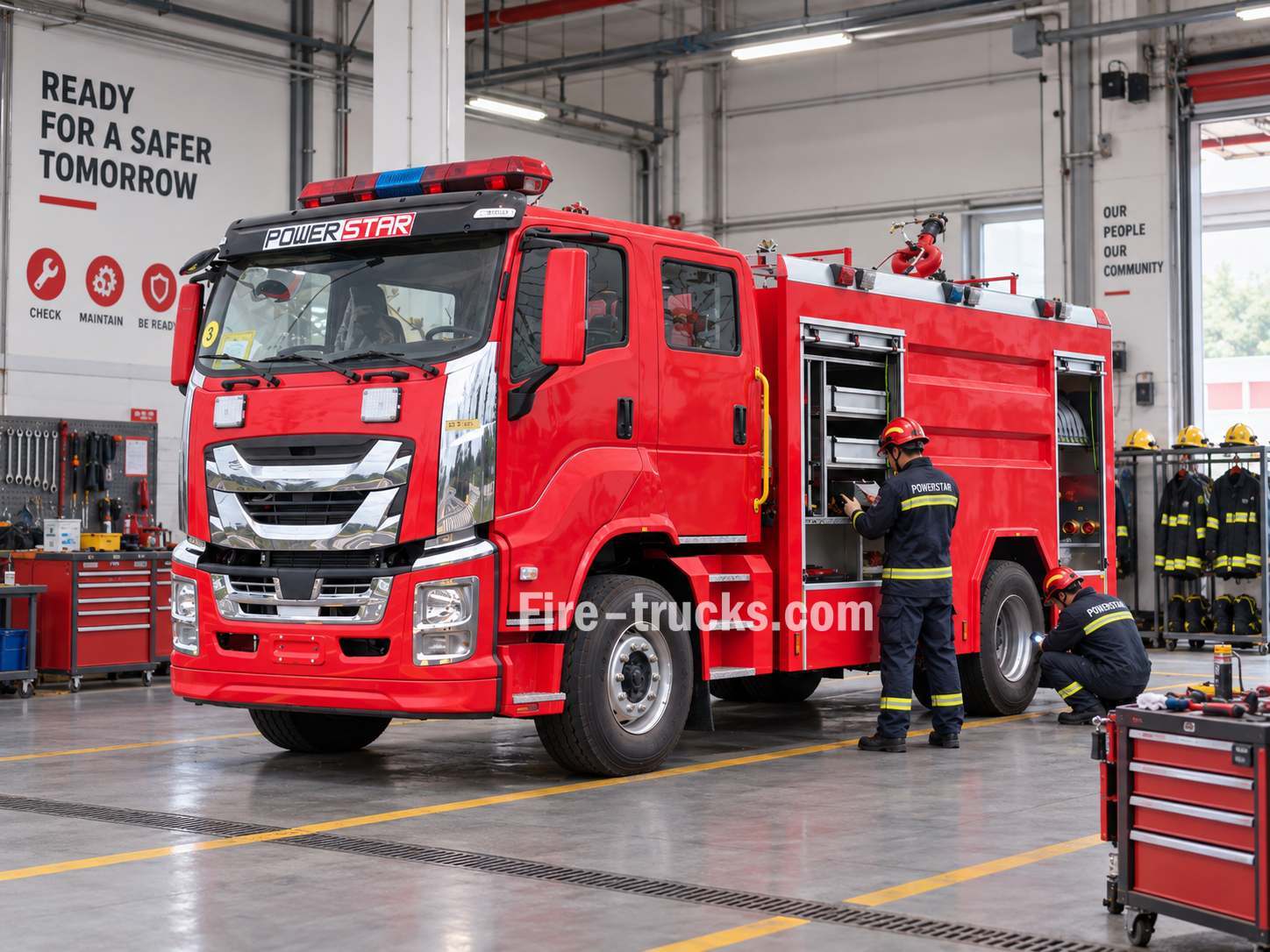
Main inspection items:
Clutch and drivetrain system: Check all bolts on the clutch, gearbox, drive shaft, universal joints, reducer, differential, axle shafts, and other drivetrain components for tightness, damage, and adequate lubrication.
Braking system: Check the brake pedal for looseness or damage; check the flexibility and working condition of the air compressor; confirm the integrity of the air reservoir; confirm the brake valve is flexible; measure brake pad wear.
Steering system: Confirm the steering gear operates normally.
Auxiliary systems: Check the working condition of lights, wipers, and brake indicators.
Whether the PTO and water pump drive shaft operate smoothly determines whether the fire truck can draw and discharge water effectively. PTO or drive shaft failure can prevent the pump from operating entirely.
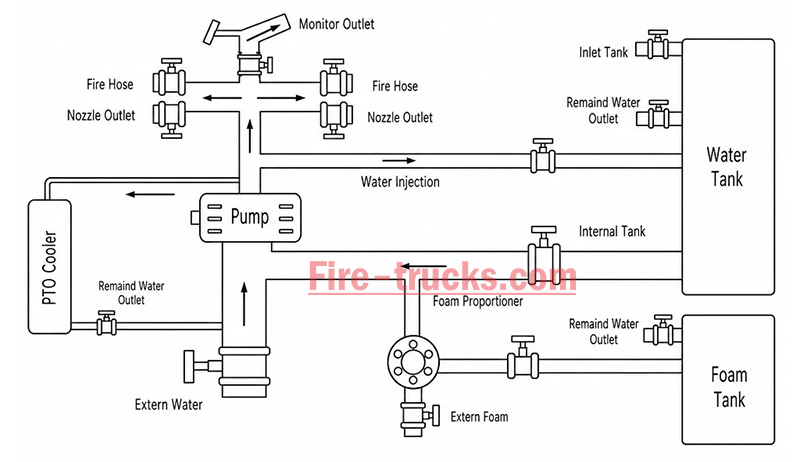 PTO:
PTO:
• Check whether the PTO engages normally
• Listen for abnormal noise
• Check whether gear engagement and disengagement are smooth
• Check for automatic disengagement
Water pump drive shaft:
• Check for abnormal noise
• Check whether fixed components are loose or damaged
• Check each drive shaft section and bearing—these require grease injection
• Tighten bolts and apply grease as needed
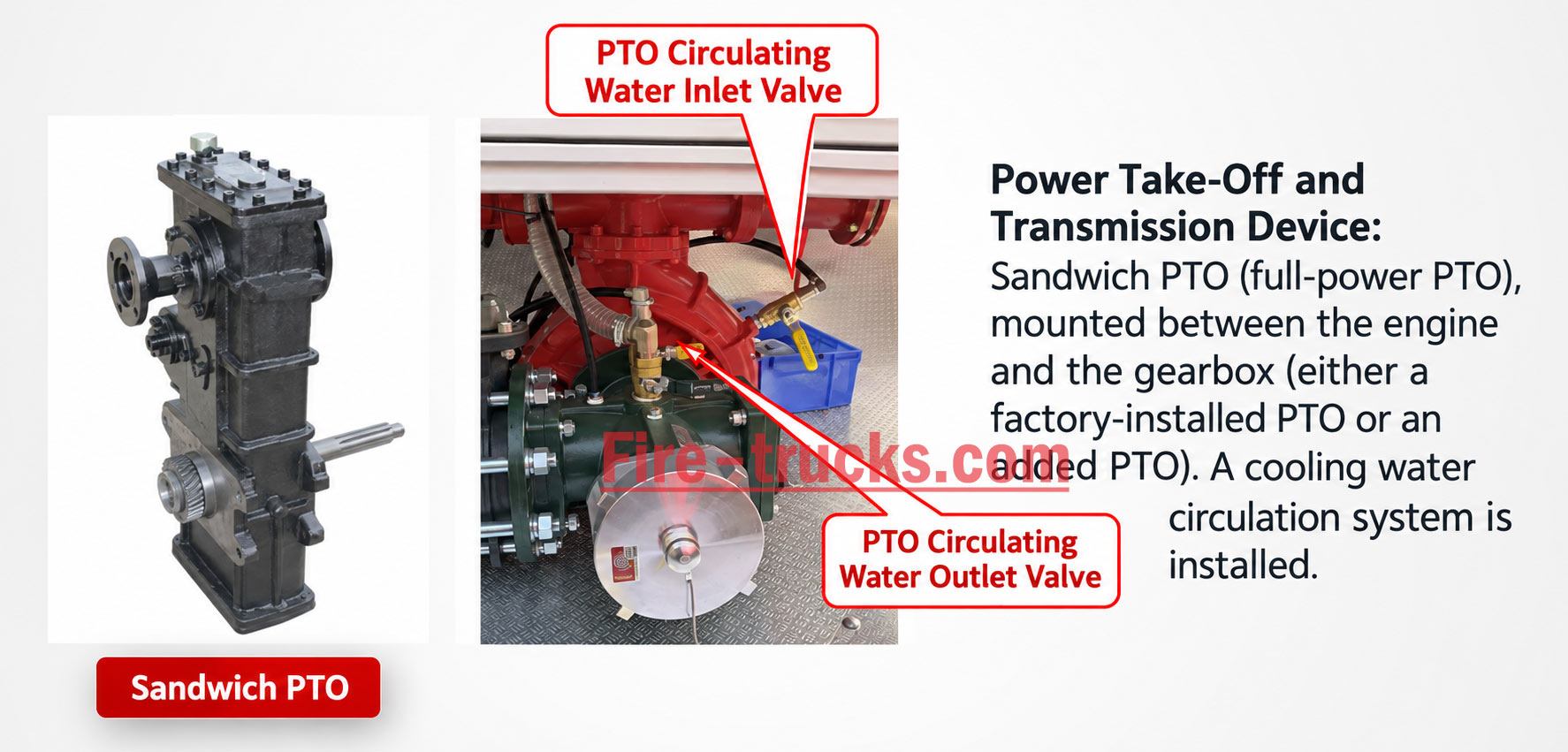
For practical use, daily fire truck inspection items can be organized into the following checklist:
| Inspection Area | What to Check | Maintenance Action |
| Fire Pump | Leaks, lubrication, performance | Lubricate, clean, investigate abnormal performance |
| Priming System | Priming performance, fluid condition (if applicable) | Inspect, top up or replace fluid as required |
| Water Tank | Corrosion, rust spots, contamination | Clean and treat corrosion |
| Foam Tank | Corrosion, residue, leaks | Clean and inspect |
| Valves | Leaks, operation, contamination | Clean, lubricate, or repair |
| Piping | Leaks, corrosion, blockage | Clean and inspect |
| Clutch/gearbox | Bolts, lubrication, operating condition | Tighten, lubricate, adjust as needed |
| Drive Shaft | Noise, looseness, lubrication | Tighten and lubricate |
| Braking System | Brake pedal, air system, brake wear | Inspect and repair |
| Steering System | Steering operation | Inspect and repair |
| PTO | Engagement, disengagement, noise | Inspect and maintain |
| Fire Pump Drive Shaft | Noise, mounting, bearings | Lubricate and tighten |
| Lights/wipers | Working condition | Repair or replace as needed |
Fire truck inspection is not a single frequency but is divided into four levels: daily, weekly, monthly, and annual.
Daily inspection (before departure / after return to station):
• Visual inspection of the fire pump—confirm no leaks and no abnormal noise
• Confirm water tank and foam tank levels
• Visual chassis inspection, including tire pressure, lights, and brake pedal
• Confirm PTO engagement status (confirm it is disengaged)
• Inventory of onboard equipment
Weekly inspection:
• Grease fire pump rotating components (if cumulative operating time reaches 3–6 hours)
• Test fire pump priming performance
• Lubricate valve and monitor moving parts
• Inspect hoses and couplings
Monthly inspection:
• Test main fire pump technical parameters (maximum suction depth, priming time, maximum flow rate)
• Check chassis drivetrain bolt tightness
• Comprehensive brake system inspection
• Lubricate PTO and drive shaft
Annual inspection:
• Comprehensive fire pump performance test (per GB 6245 standard)
• Internal tank corrosion inspection
• Fire monitor flow and range test
• Complete vehicle performance verification
Q1: What should be checked on a fire truck every day?
A: Daily inspection should cover the fire pump, water tank, foam tank, valves, piping, PTO, drive shaft, braking system, steering system, lights, wipers, and other critical vehicle and firefighting equipment.
Q2: How often should the fire pump be lubricated?
A: Each rotating component of the fire pump should be greased once every 3 to 6 hours of operation. During periods of frequent use, this may mean daily lubrication. During low-activity periods, follow the manufacturer's recommended schedule.
Q3: What should I do if I find corrosion in the fire truck tank?
A: Clean the rusted area, allow it to dry, and apply a protective coating such as composite resin, resin, or paint. In severe cases, repair welding may be necessary. After treatment, monitor the area for recurrence and check the pump and piping for rust particles that may have already entered the system.
Q4: Why does foam concentrate cause more tank corrosion than water?
A: Foam concentrate is chemically active and often corrosive. Unlike plain water, it can attack tank walls, piping, and seals over time. Foam fire trucks therefore require more frequent tank inspection and thorough flushing after each use.
Q5: What are the signs that the PTO is not engaging properly?
A: Common signs include abnormal noise during engagement, difficulty shifting in or out, and automatic disengagement during operation. Any of these symptoms should be investigated immediately, as PTO failure will prevent the pump from operating.
Q6: Can I perform daily inspections myself, or do I need a technician?
A: Most daily inspections—visual checks, fluid level verification, and basic lubrication—can be performed by trained fire department personnel. However, more complex tasks such as pump performance testing, seal replacement, and drivetrain repair should be handled by qualified technicians.
Daily inspection and maintenance of fire trucks is not optional—it is the foundation of emergency readiness. The four core areas covered in this guide are:
• Fire pump — lubricate every 3–6 hours of operation, test performance parameters, clean after use, and drain residual water
• Tanks — inspect regularly for corrosion, clean and treat rust promptly, and check valves and piping
• Chassis — check clutch, transmission, brakes, steering, and auxiliary systems for looseness, damage, and fluid levels
• PTO and drive shaft — verify engagement, check for abnormal noise, and lubricate bearings and joints


Anda mungkin berminat dengan maklumat berikut
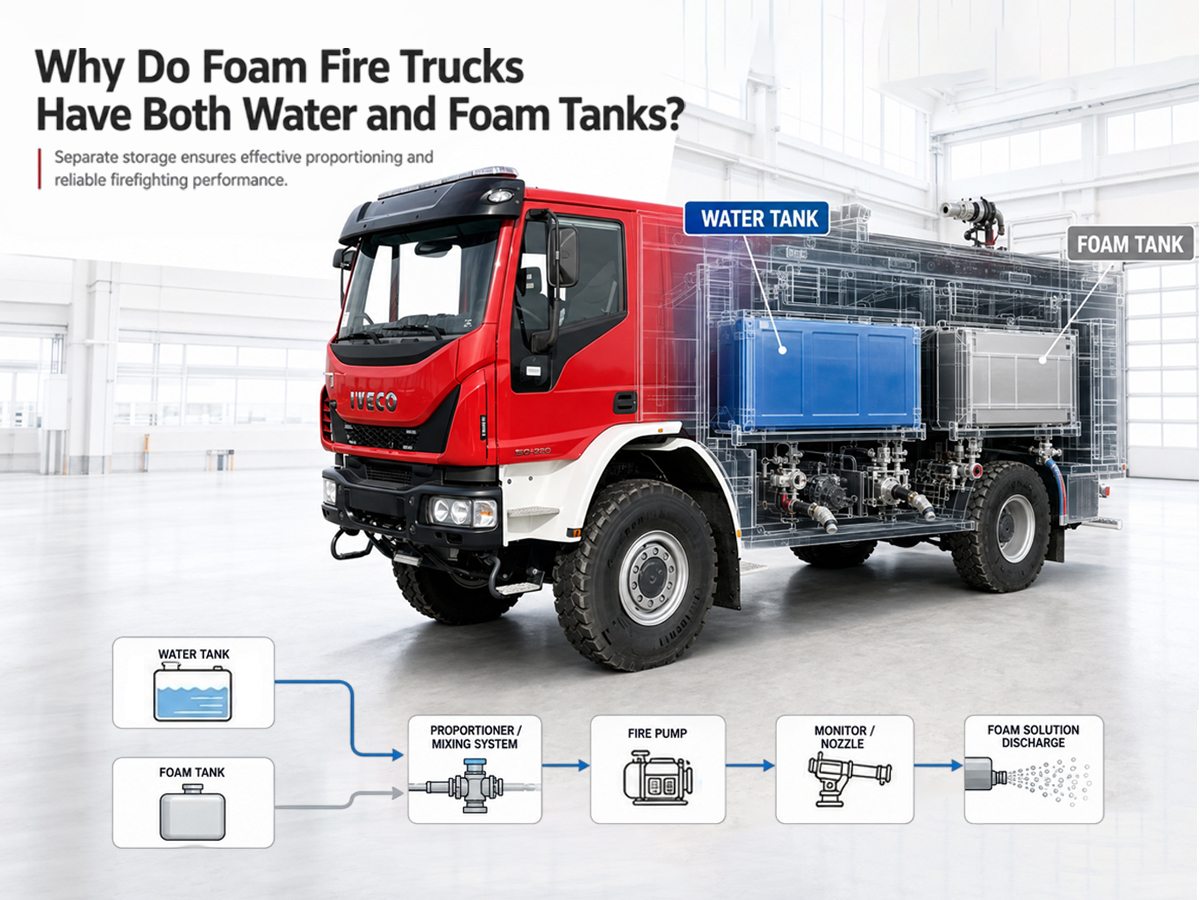
Trak bomba busa menggabungkan tangki pekatan busa khusus dengan tangki air berasingan dan sistem perkadaran ketepatan. Mereka menggunakan sistem perkadaran untuk memasukkan pekatan busa ke dalam aliran air pada kepekatan tertentu, biasanya 1%, 3%, atau 6%, bergantung pada pekatan busa dan aplikasi pemadaman kebakaran.tangki dwiReka bentuk ini membolehkan anggota bomba menggunakan air sahaja apabila buih tidak diperlukan dan memperkenalkan buih pekat hanya apabila diperlukan. Ini meningkatkan fleksibiliti operasi, membantu mengawal penggunaan buih dan membolehkan sistem pemadam kebakaran dikonfigurasikan untuk bahaya kebakaran yang berbeza. Prinsip kerja teras dan teknologi utama trak bomba buih, terutamanya mengapa ia mempunyai tangki air dan buih—merupakan tumpuan ramai pelanggan. Mari kita pelajari mengenainya hari ini. Jawapan Pantas: Trak bomba busa biasanya menggunakan tangki pekatan air dan busa yang berasingan kerana air dan pekatan busa diperlukan dalam perkadaran yang berbeza dan bertujuan untuk digabungkan semasa operasi dan bukannya disimpan sebagai larutan pracampur untuk jangka masa yang lama. Tangki air menyediakan bekalan air utama, manakala tangki busa menyimpan agen busa pekat. Sistem perkadaran mengawal jumlah pekatan yang dimasukkan ke dalam aliran air, membolehkan trak bertukar antara mod pemadaman kebakaran air sahaja dan busa. Saya. Apakah Komponen Utama Trak Bomba Buih? 1. Tangki Air Pembinaan tahan kakisan (keluli karbon dengan salutan anti-karat atau keluli tahan karat), kapasiti antara 4,000 hingga 6,000 liter. Dilengkapi dengan sesekat untuk mengurangkan lonjakan cecair semasa pergerakan kenderaan dan cagak fleksibel untuk menyerap lenturan casis di medan kasar. 2. Tangki Pekat Buih Pembinaan keluli tahan karat untuk menahan serangan kimia daripada pekatan busa aktif, biasanya berkapasiti 500-2,000 liter. Bergantung pada pekatan busa dan reka bentuk sistem, tangki mungkin menggabungkan ciri-ciri seperti pengaturan peredaran atau pengadukan untuk membantu mengekalkan keadaan pekatan semasa penyimpanan. 3. Sistem Pengagihan Buih Sistem perkadaran yang menarik pekatan busa daripada yang dikhaskanbuihtangki dan memasukkannya ke dalam aliran air pada kepekatan tertentu. Bergantung pada pekatan busa dan reka bentuk sistem, perkadaran mungkin menggunakan teknologi tekanan seimbang, pacuan pam atau berasaskan venturi. 4. Pam Kebakaran Pam bomba merupakan sumber kuasa bagi keseluruhan sistem buih. Ia menarik air dari tangki air dan menekannya kepada aliran dan tekanan yang diperlukan untuk operasi memadam kebakaran. Pam biasanya digerakkan oleh pengangkut kuasa (PTO) kenderaan atau enjin bebas, dan mesti serasi dengan sistem perkadaran untuk memastikan suntikan pekatan buih yang tepat merentasi kadar aliran yang berbeza-beza. Konfigurasi biasa termasuk pam emparan satu peringkat untuk operasi standard dan pam berbilang peringkat untuk aplikasi tekanan tinggi. 5. Monitor Buih Monitor buih menghantar larutan buih s...
Perincian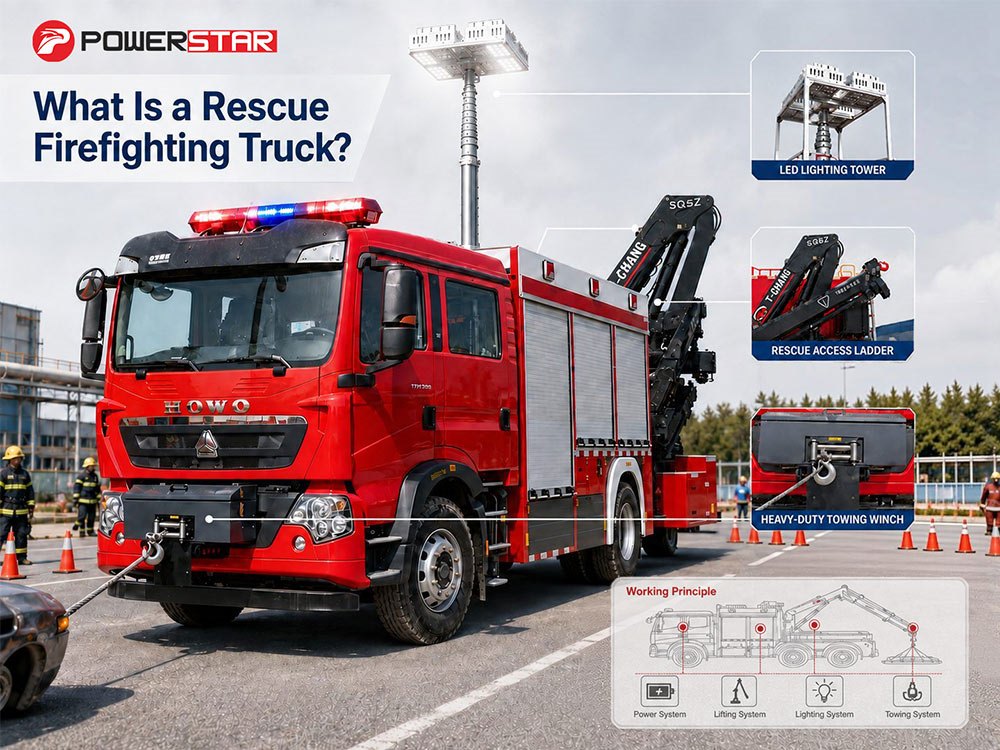
Trak pemadam kebakaran penyelamat ialah kenderaan kecemasan khusus yang direka untuk melaksanakan operasi pemadaman kebakaran dan menyelamat. Tidak seperti trak bomba standard yang tertumpu terutamanya pada pemadaman kebakaran,trak pemadam kebakaran penyelamatmenggabungkan peralatan memadam kebakaran dengan peralatan menyelamat, peranti mengangkat dan mengangkat, peralatan memotong dan menyebarkan, win, penjana dan sistem pencahayaan. Artikel ini menerangkan apa itu trak pemadam kebakaran penyelamat, bagaimana ia berbeza daripada peralatan bomba yang lain, peralatan yang dibawanya dan bila ia digunakan. I. Apakah Trak Pemadam Kebakaran Penyelamat? Trak pemadam kebakaran penyelamat ialah kenderaan kecemasan pelbagai guna yang menggabungkan keupayaan pemadaman kebakaran dengan peralatan menyelamat khusus. Ia digunakan terutamanya untuk menyediakan keupayaan tindak balas kecemasan yang komprehensif apabila berlaku insiden yang melibatkan orang, kenderaan, bangunan atau kemudahan perindustrian. Bergantung pada konfigurasi kenderaan, trak pemadam kebakaran penyelamat boleh dilengkapi dengan pelbagai jenis alat penyelamat dan sistem pemadam kebakaran. Pemilihan peralatan sebenar berbeza-beza berdasarkan tujuan penggunaan kenderaan. Contohnya, kenderaan yang dikonfigurasikan untuk penyelamatan bandar mungkin mempunyai susun atur peralatan yang berbeza daripada yang direka untuk penyelamatan perindustrian, tindak balas gempa bumi atau pemulihan kemalangan jalan raya. II. Apakah Peralatan yang Dibawa oleh Trak Pemadam Kebakaran Penyelamat? Peralatan yang dibawa pada trak pemadam kebakaran penyelamat bergantung pada reka bentuk kenderaan dan aplikasi yang dimaksudkan. Walau bagaimanapun, peralatan pada kebanyakan model boleh disusun kepada beberapa kategori utama: peralatan pemadam kebakaran, alat penyelamat, peralatan kuasa, peralatan pencahayaan, peranti pengangkat dan penunda, dan peralatan pelindung diri. 1. Peralatan Pemadam Kebakaran Peralatan pemadam kebakaran mungkin termasuk alat pemadam api, hos kebakaran, muncung kebakaran, pam mudah alih, tangki air, sistem pemadam kebakaran buih, monitor kebakaran dan alat pemadam api lain. 2. Alat Penyelamat Hidraulik Alat penyelamat hidraulik biasanya digunakan dalam operasi penyelamatan kemalangan jalan raya untuk memotong, meregang atau mengangkat struktur kenderaan yang rosak. Peralatan biasa termasuk pemotong hidraulik, penyebar hidraulik dan pelantak hidraulik. 3. Penjana Kuasa Penjana membekalkan kuasa elektrik untuk alat menyelamat, peralatan pencahayaan, peranti komunikasi dan peralatan lain apabila tiada sumber kuasa luaran tersedia di tempat kejadian. 4. Peralatan Pencahayaan Sistem lampu kecemasan membantu anggota penyelamat beroperasi pada waktu malam, di dalam bangunan, di lebuh raya dan dalam keadaan cahaya malap yang lain. 5. Win dan Peralatan Tunda Sesetengah trak pemadam kebakaran penyelamat boleh dilengkapi dengan win dan peralatan penunda untuk menggerakkan kenderaa...
Perincian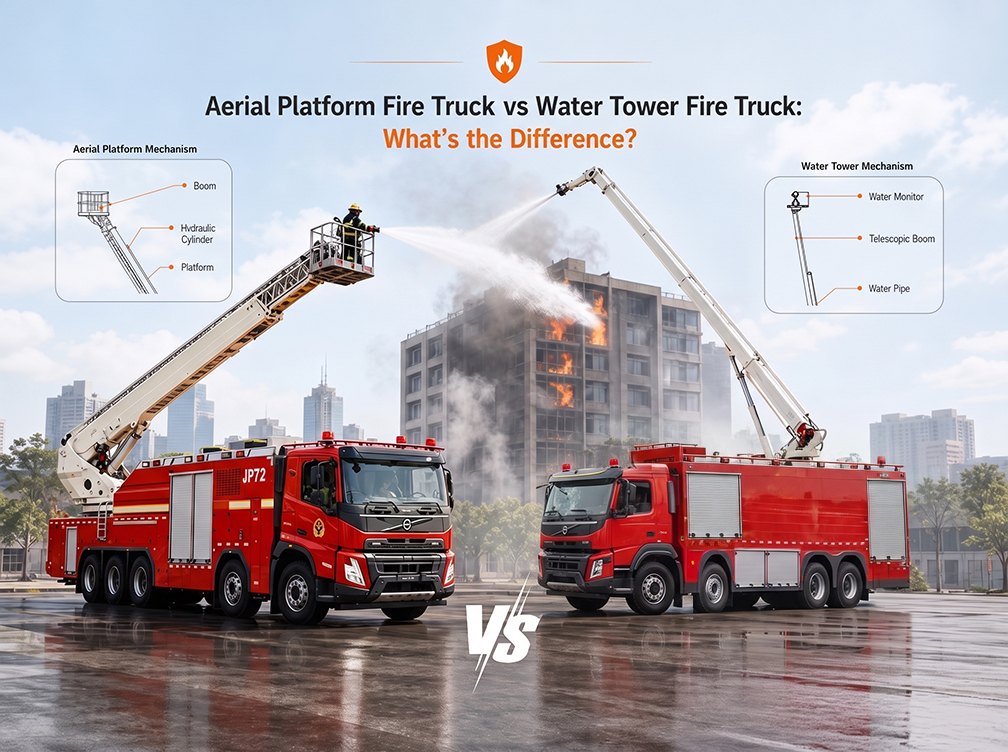
Apabila melibatkan pemadaman kebakaran di bangunan bertingkat tinggi, kemudahan industri, atau gudang besar, trak bomba udara adalah tidak dapat digantikan. Namun, antara pelbagai jenis peralatan udara, dua jenis sering menimbulkan kekeliruan: trak bomba platform udara dan trak bomba menara air. Walaupun kelihatan serupa pada pandangan pertama—kedua-duanya mempunyai boom hidraulik dan direka untuk pemadaman kebakaran di tempat tinggi—kedua-duanya mempunyai misi yang berbeza secara asas. Artikel ini menghuraikan perbezaan utama antara kedua-dua jenis kenderaan ini, membantu profesional perkhidmatan bomba, pengurus perolehan, dan pengedar peralatan membuat keputusan berdasarkan keperluan operasi. I. Apakah Itu Trak Platform Udara? Menurut piawaian kebangsaan China GB 7956.12-2015, kedua-dua kenderaan ini tergolong dalam kategori kenderaan pemadam kebakaran udara—kenderaan yang dilengkapi dengan boom pengangkat, meja putar, dan peralatan pemadam kebakaran untuk operasi altitud tinggi. Walau bagaimanapun, definisi khususnya menunjukkan perbezaan kritikal. Trak Bomba Platform Udara Trak bomba platform udara dilengkapi dengan boom gabungan boleh lipat atau boleh lipat-teleskopik, platform kakitangan, meja putar, dan peranti pemadam kebakaran. Ciri utama ialah platform kerja (bakul) di hujung boom, tempat anggota bomba boleh berdiri untuk menjalankan operasi menyelamat dan pemadaman kebakaran. Ciri-ciri utama:• Dilengkapi dengan platform yang boleh membawa 750 paun hingga lebih daripada 1,500 paun anggota dan peralatan• Direka untuk kedua-dua penyelamatan dan pemadaman kebakaran—anggota bomba boleh beroperasi terus dari platform• Platform boleh digunakan bersama peranti kawalan penurunan, win hidraulik, atau gelongsor penyelamat• Jangkauan mendatar yang lebih luas dan jarak kerja yang lebih besar berbanding menara air II. Apakah Itu Trak Bomba Menara Air? Trak bomba menara air dilengkapi dengan boom gabungan boleh lipat atau boleh lipat-teleskopik, meja putar, dan peranti pemadam kebakaran—tanpa platform kakitangan. Sebaliknya, monitor air (meriam air) dipasang pada hujung boom, yang boleh dikawal dari jauh dari tanah. Ciri-ciri utama:• Tiada platform kakitangan—anggota bomba beroperasi dari tanah melalui kawalan jauh• Difokuskan sepenuhnya pada pemadaman kebakaran di tempat tinggi, bukan penyelamatan• Menyampaikan aliran air yang sangat tinggi—melebihi 2,000 gelen seminitpada banyak model industri• Direka untuk perlindungan kebakaran industri yang tidak memerlukan keupayaan menyelamat III. Perbandingan Sebelah Menyebelah Ciri Trak Bomba Platform Udara Trak Bomba Menara Air Fungsi Utama Menyelamat + pemadaman kebakaran Pemadaman kebakaran sahaja Peralatan Hujung Boom Platform kerja (bakul) untuk anggota Monitor kebakaran (meriam air) Anggota pada Boom Ya—anggota bomba boleh beroperasi dari platform Tidak—dikendalikan dari tanah melalui kawalan jauh Keupayaan Menyelamat Tinggi—boleh memindahkan individu yang terperangkap Tiada Kapasiti Aliran Air...
Perincian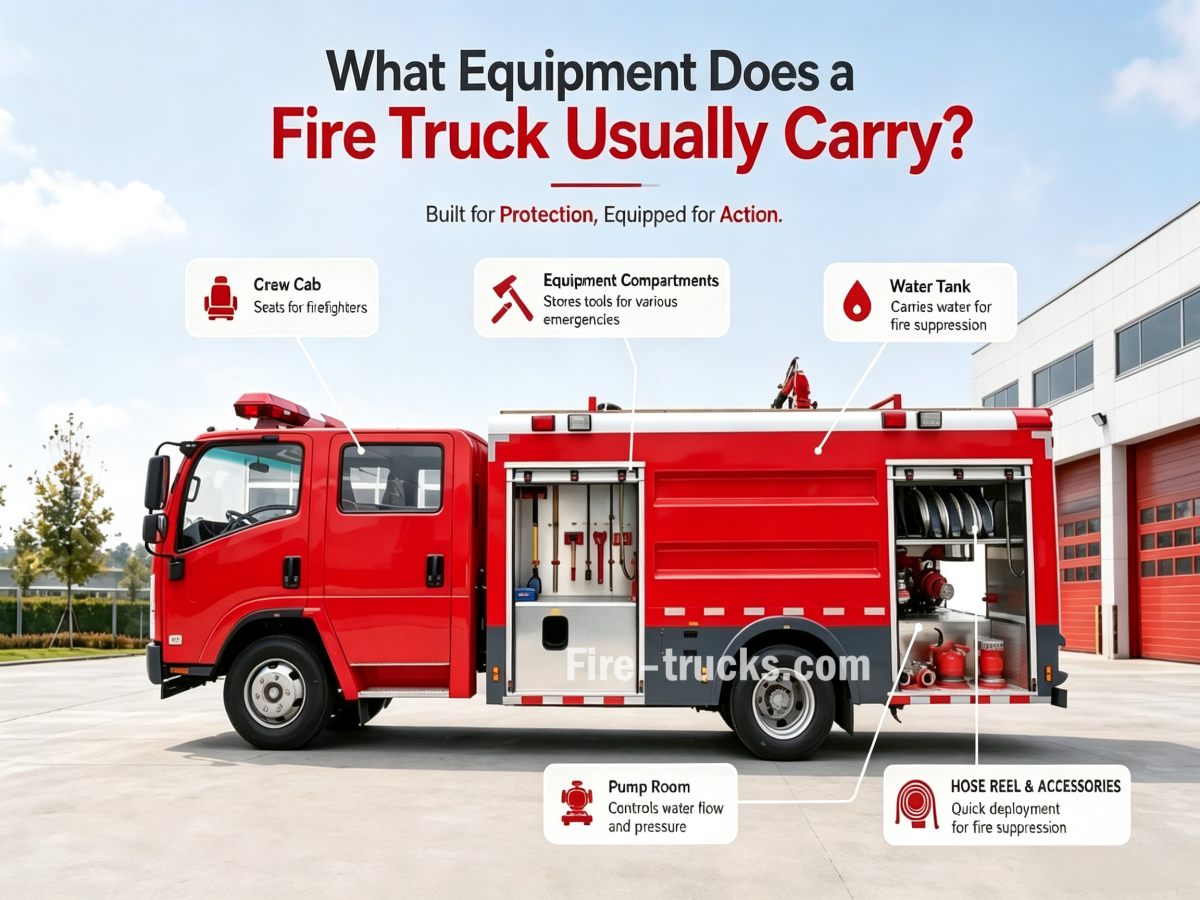
Sebuah trak bomba biasanya membawa peralatan pemadaman kebakaran, bekalan air, penyelamatan dan perlindungan keselamatan. Peralatan biasa termasuk pam bomba, tangki air, hos bomba, muncung bomba, monitor bomba, injap, tangga bomba, alat penyelamat, peralatan perlindungan dan peranti komunikasi. Artikel ini menghuraikan secara sistematik pengelasan, fungsi dan pertimbangan pemilihan bagi peralatan standard trak bomba peralatan, membantu profesional perolehan dan pengguna akhir membina pemahaman lengkap tentang konfigurasi jentera bomba. I. Pengelasan Peralatan Trak Bomba 1. Peralatan Pemadaman Kebakaran— Alat teras untuk pemadaman kebakaran secara langsung, termasuk muncung bomba, monitor bomba, hos bomba, pembahagi air dan penyesuai. 2. Peralatan Penyelamatan dan Pecah Masuk— Alat untuk mencipta laluan akses bagi operasi penyelamatan dan pemadaman kebakaran, termasuk alat penyelamat hidraulik, kapak bomba, batang cungkil, linggis, gergaji pemotong dan gergaji rantai. 3. Peralatan Penyelamatan dan Menyelamatkan Nyawa— Peralatan untuk pencarian, pemindahan dan perlindungan anggota, termasuk pengusung, tali penyelamat, cangkuk keselamatan, peranti kawalan penurunan, alat pernafasan kendiri (SCBA) dan silinder udara ganti. 4. Peralatan Pembuangan Asap dan Pencahayaan— Peralatan untuk memperbaiki keadaan di lokasi kebakaran, termasuk pengusir asap, menara pencahayaan mudah alih dan lampu sorot carian berintensiti tinggi mudah alih. 5. Peralatan Perlindungan Peribadi (PPE)— Kelengkapan untuk melindungi keselamatan anggota bomba, termasuk topi keledar, pakaian perlindungan pemadaman kebakaran struktur, sarung tangan, but dan tali pinggang keselamatan. 6. Peralatan Komunikasi dan Peninjauan— Peralatan untuk pengumpulan maklumat di lokasi kebakaran dan penyelarasan arahan, termasuk radio dua hala, kamera pengimejan haba dan pengesan gas toksik. II. Peralatan Pemadaman Kebakaran pada Trak Bomba 1. Pam Bomba Pam bomba ialah sumber kuasa bagi semua operasi pemadaman kebakaran. Ia memberi tekanan secara mekanikal kepada air, memberikan tenaga kinetik yang mencukupi untuk melengkapkan keseluruhan proses "menyedut air → memberi tekanan → menghantar → menyahcas." Spesifikasi biasa pam bomba: • Pam Bomba Tekanan Standard (jenis CB10/30):Kadar aliran ≥30L/s, tekanan berkadar 1.0MPa, pemasangan di bahagian belakang. Sesuai untuk tangki air bomba standard dan trak bomba buih, memenuhi kebanyakan keperluan bekalan air pemadaman kebakaran bandar dan industri. • Pam Bomba Tekanan Sederhana/Tinggi:Aliran tekanan rendah 30L/s pada 1.0MPa, aliran tekanan tinggi 20L/s pada 2.0MPa, pemasangan di bahagian belakang. Reka bentuk tekanan dwi menyokong bekalan isipadu tinggi (tekanan rendah) serta penghantaran jarak jauh/tinggi (tekanan tinggi) menggunakan satu pam. Sesuai untuk trak bomba tempur utama bandar dan senario pemadaman kebakaran bangunan tinggi. • Pam Bomba Tekanan Tinggi:Kadar aliran 10-15L/s, tekanan sehingga 4.0MPa atau lebih tinggi, pemasangan di bahagian belakan...
Perincian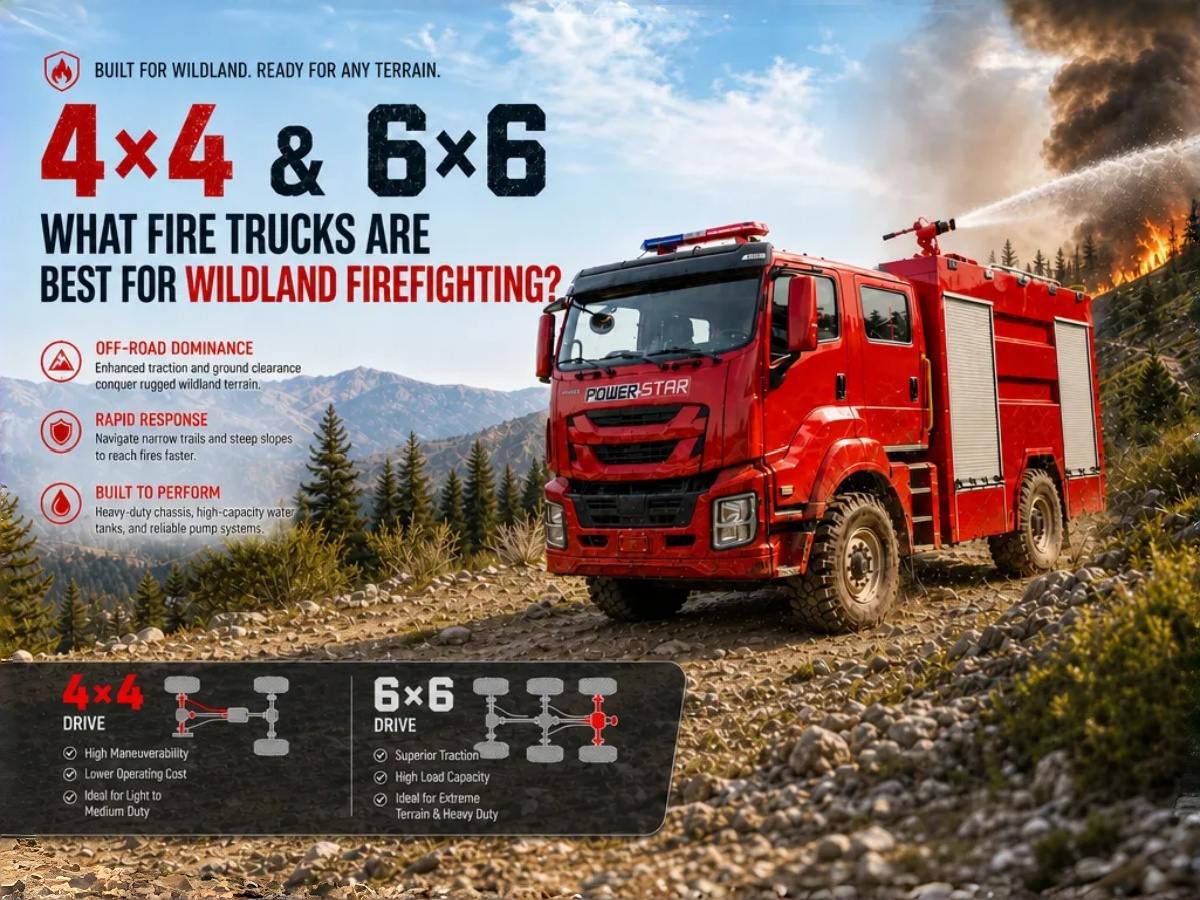
Pemadaman kebakaran hutan dan kawasan liar menghadirkan cabaran yang pada asasnya berbeza daripada pemadaman kebakaran struktur. Di hutan terpencil, padang rumput, dan kawasan pergunungan, trak bomba mesti melalui laluan sempit, mendaki cerun curam, dan beroperasi jauh dari pili bomba atau sumber air. Memilih trak pemadam kebakaran yang tepat ialah keputusan strategik yang secara langsung mempengaruhi masa tindak balas, keselamatan kru, dan keberkesanan pemadaman kebakaran. Artikel ini memberikan huraian menyeluruh tentang jenis trak bomba yang paling sesuai untuk pemadaman kebakaran hutan dan kawasan liar, ciri terasnya, serta kaedah pemilihan, membantu anda membuat keputusan yang tepat berdasarkan keperluan operasi khusus anda. Jawapan Ringkas Kebakaran hutan dan kawasan liar dicirikan oleh kawasan kebakaran yang luas, bentuk muka bumi yang kompleks, sumber air yang terhad, dan keadaan jalan yang buruk, jadi tiada satu trak bomba yang boleh menangani semua situasi kebakaran hutan. Secara umum, pemadaman kebakaran hutan dan kawasan liar terutamanya menggunakan jenis trak bomba berikut: • Trak bomba hutan dan kawasan liar ringan: untuk akses jalan hutan dan tindak balas pantas• Trak bomba hutan dan kawasan liar pacuan luar jalan 4×4: untuk kawasan pergunungan dan berbukit• Trak bomba hutan dan kawasan liar 6×6: untuk kebakaran hutan berskala besar dan operasi berpanjangan• Tangki air: untuk bekalan air berterusan dan sokongan• Trak bomba buih: untuk kemudahan minyak, peralatan hutan, atau kebakaran khas• Kenderaan penyelamat: untuk komunikasi, pencahayaan, pemecahan halangan, dan sokongan logistik I. Mengapa Kebakaran Hutan dan Kawasan Liar Memerlukan Trak Bomba Khusus? Kebakaran hutan dan kawasan liar berbeza secara asas daripada kebakaran struktur dalam beberapa aspek kritikal: Ciri utama kebakaran hutan dan kawasan liar:• Kawasan kebakaran yang luas meliputi hektar tanah• Arah angin yang berubah dengan cepat• Bentuk muka bumi yang kompleks dan lasak• Akses terhad atau tiada akses kepada pili bomba atau sumber air• Jalan hutan sempit dan tidak berturap• Keadaan komunikasi yang sukar Trak bomba bandar standard biasanya tidak sesuai untuk pemadaman kebakaran hutan dan kawasan liar atas sebab berikut: •Tidak mempunyai pacuan 4×4 atau pacuan semua roda untuk jalan gunung tidak berturap dan cerun curam;•Saiz yang lebih besar dan kelegaan tanah yang rendah menyebabkan ia mudah tersangkut di laluan hutan sempit dan kawasan lembut;•Pam bandar mengutamakan kadar aliran tinggi pada tekanan sederhana, manakala operasi hutan dan kawasan liar memerlukan tekanan tinggi melalui sambungan hos yang panjang dengan air terhad—pendekatan yang pada asasnya berbeza. II. Jenis Biasa Trak Bomba Hutan dan Kawasan Liar Jenis Trak Bomba Ciri Utama Senario Penggunaan Trak Bomba Hutan dan Kawasan Liar Ringan Mobiliti tinggi, saiz kompak Rondaan hutan, serangan awal Trak Bomba Hutan dan Kawasan Liar 4x4 Keupayaan luar jalan yang kuat Kawasan pergunungan dan berbukit Trak ...
Perincian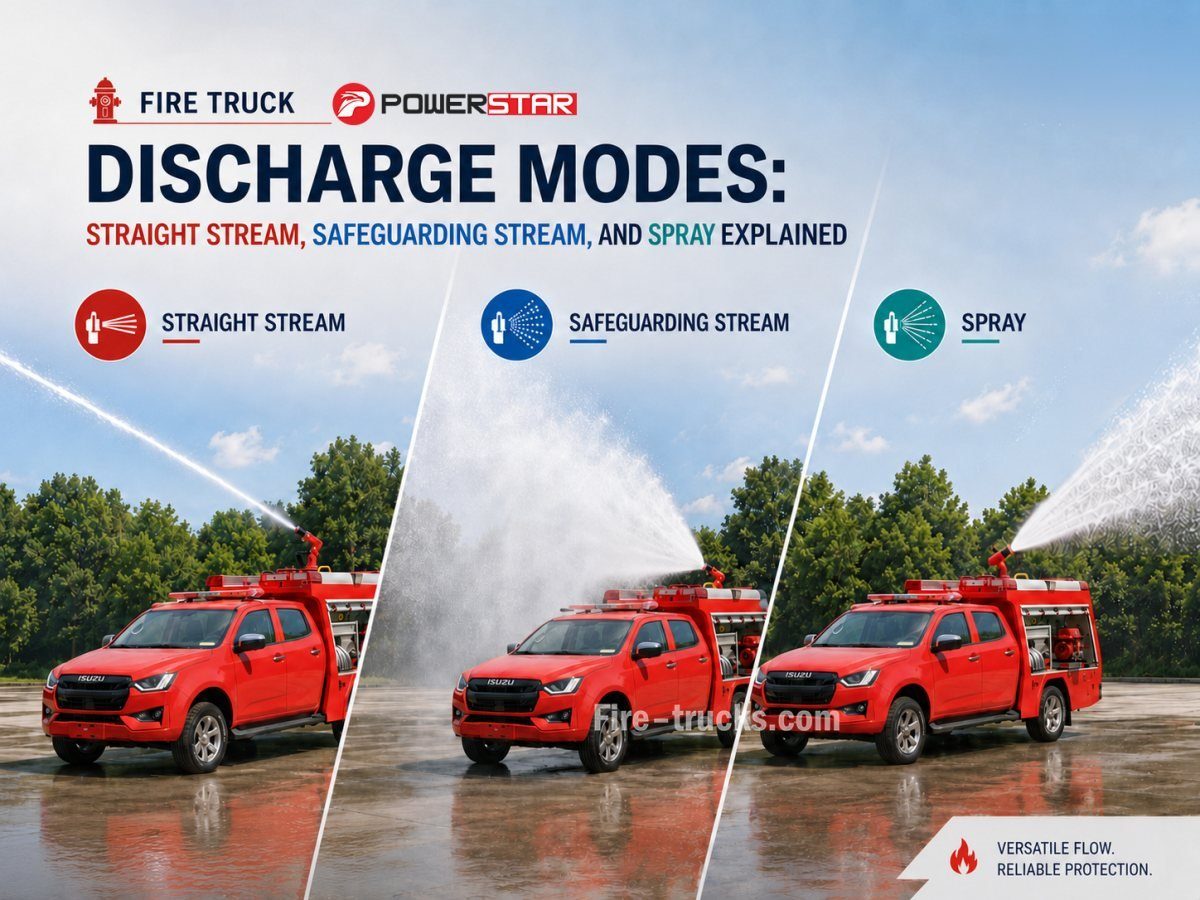
Dalam operasi pemadaman kebakaran, pemilihan mod pelepasan secara langsung menentukan kecekapan pemadaman api, keselamatan operasi dan keberkesanan kawalan kebakaran. Kebanyakan orang tidak menyedari bahawa trak bomba muncung boleh bertukar antara tiga mod pelepasan teras: aliran lurus, aliran semburan dan aliran perlindungan. Mod yang berbeza mempunyai perbezaan ketara dari segi corak aliran, jarak, daya hentaman dan kawasan liputan, dan setiap satu berkaitan dengan situasi kebakaran yang sama sekali berbeza. Artikel ini, berdasarkan piawaian operasi pemadaman kebakaran profesional, menganalisis secara menyeluruh prinsip, ciri utama dan senario penggunaan bagi tiga mod pelepasan tersebut, membantu pelanggan kami menguasai teknik pelepasan trak bomba secara sistematik. I. Mengapa Trak Bomba Memerlukan Mod Pelepasan Berbeza? Aliran lurus, aliran semburan dan aliran perlindungan sepadan dengan tiga mekanisme pemadaman api yang berbeza: pemadaman melalui hentaman, penyesakan melalui pengewapan dan perlindungan sinaran haba. Anggota bomba mesti menukar mod secara fleksibel mengikut keadaan lokasi. Jadi, mengapa kita tidak boleh terus menggunakan hanya satu jenis aliran? 1. Kepelbagaian jenis kebakaran memerlukan bentuk medium pemadam yang berbeza Jenis kebakaran yang berbeza mempunyai ciri pembakaran yang berbeza, yang menentukan kaedah pemadaman yang sesuai: • Kebakaran bahan pepejal Kelas A memerlukan hentaman aliran lurus untuk memecahkan bahan yang terbakar dan menembusi bagi penyejukan dalaman; • Kebakaran cecair Kelas B tidak boleh menggunakan hentaman aliran lurus (yang menyebabkan percikan dan menyebarkan api), tetapi perlu menggunakan aliran perlindungan atau aliran semburan untuk penutupan dan pencairan; • Kebakaran elektrik berarus Kelas E hanya boleh menggunakan aliran semburan, kerana titisan air halus tidak membentuk laluan pengalir berterusan; • Kebakaran dalam ruang tertutup memerlukan aliran semburan untuk memenuhi seluruh ruang, mencapai pemadaman melalui penyerapan haba pengewapan dan penyesakan. Tiada satu mod tunggal yang boleh menyesuaikan diri dengan semua jenis kebakaran. 2. Tahap berbeza bagi kebakaran yang sama memerlukan pendekatan taktikal yang berbeza Walaupun untuk kebakaran yang sama, tahap yang berbeza memerlukan mod pelepasan yang berbeza: • Pada peringkat awal apabila api sangat marak, aliran lurus diperlukan untuk menghentam titik api dari jarak jauh bagi penindasan pantas; • Semasa mara ke hadapan, aliran perlindungan diperlukan untuk membentuk penghalang tirai air bagi menyekat sinaran haba dan melindungi anggota; • Sebelum memasuki bilik, aliran semburan diperlukan untuk menyejukkan dan mencairkan asap serta gas, mewujudkan keadaan untuk serangan dalaman. Satu mod tunggal tidak dapat memenuhi keperluan operasi sepanjang keseluruhan proses pemadaman kebakaran. 3. Jarak, kawasan liputan dan kecekapan penyejukan tidak dapat dicapai serentak Ketiga-tiga mod mempunyai kelebihan dan kekurangan tersendiri dalam tiga dim...
Perincian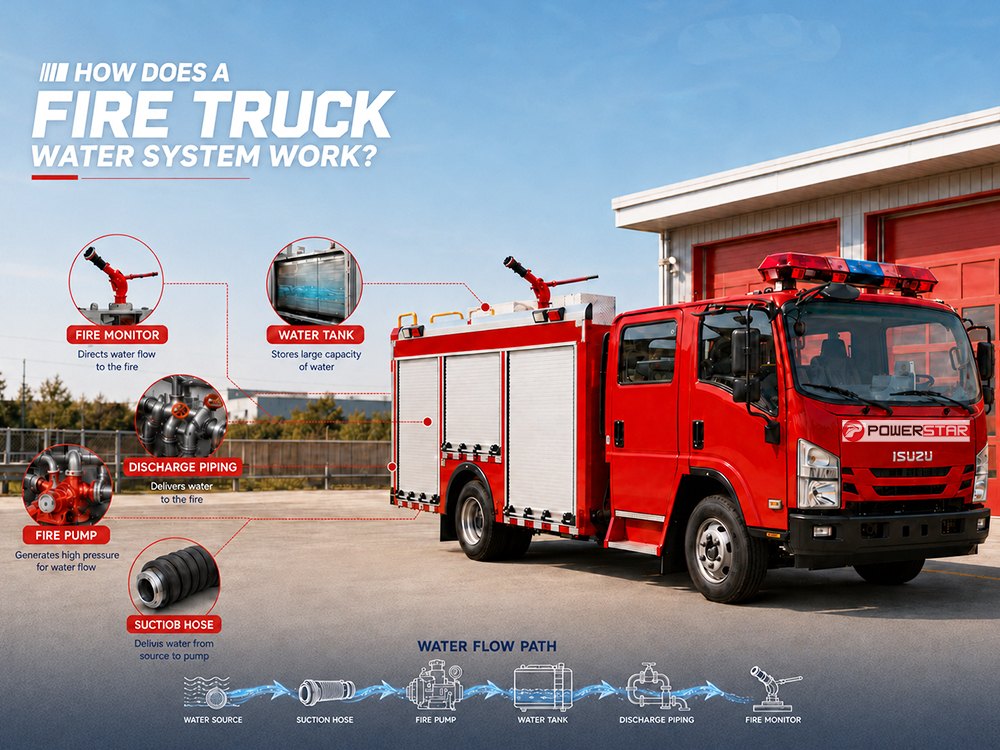
Sistem paip air trak bomba ialah teras bagi setiap operasi pemadaman kebakaran. Ia mengarahkan air dengan tepat dari tangki atau sumber luaran melalui pam, injap dan paip untuk menghantar air bertekanan tinggi atau buih ke lokasi kebakaran — sama ada kebakaran bangunan tinggi di pusat bandar yang padat atau kebakaran tangki penyimpanan petrokimia di kawasan perindustrian. trak bomba sistem paip air terdiri daripada pelbagai komponen yang berfungsi bersama: pam bomba, tangki air, hos sedutan, paip pelepasan, injap, penyambung pembahagi, penyambung pengumpul, penapis, monitor bomba, gandingan hos dan banyak lagi. Laluan aliran lengkap ialah: Tangki Air → Hos Sedutan → Penapis → Pam Bomba → Sistem Pengawalan Tekanan → Manifold Pelepasan → Injap → Penyambung Pembahagi → Monitor Bomba / Gandingan Hos → Muncung Artikel ini menerangkan setiap komponen sistem paip air dan cara komponen tersebut berfungsi bersama untuk menghantar air pada tekanan dan kadar aliran yang betul. I. Komponen Teras Sistem Paip Air Tangki Air Menyimpan bekalan air di atas kenderaan. ● Kapasiti: Biasanya 2,000–12,000 liter. ● Penghantaran: Membekalkan air kepada pam melalui paip masukan. ● Ciri-ciri: Sekat anti-olengan untuk kestabilan kenderaan, penapis untuk menapis serpihan, dan sistem penyebuan untuk mengambil air daripada sumber air semula jadi. Pam Bomba Pam empar yang digerakkan oleh enjin trak melalui PTO; satu peringkat/berbilang peringkat, besi tuang atau gangsa. ● Gred tekanan: Tersedia dalam penarafan standard 0.8 MPa, 1.0 MPa, 1.2 MPa dan 1.4 MPa, sepadan dengan keperluan pemadaman kebakaran biasa. ● Kadar aliran: Berjulat daripada 1,200 hingga 6,000 L/min, dengan lengkung prestasi dioptimumkan untuk operasi tekanan tinggi dan isipadu tinggi. Injap dan Paip Rangkaian paip dan injap yang mengawal arah serta isipadu aliran air. ● Injap masukan: Menyambungkan pam kepada sumber air luaran (hidran atau titik pengambilan air) ● Injap tangki-ke-pam: Membolehkan pam menarik air secara terus daripada tangki atas kenderaan ● Injap pelepasan: Mengawal aliran air ke hos dan muncung II. Cara Sistem Paip Air Trak Bomba Berfungsi Langkah 1: Pengambilan Air dan Penyebuan Air memasuki sistem daripada tangki atas kenderaan, hidran bomba atau sumber air semula jadi (tasik, sungai, kolam). Apabila mengambil air daripada sumber semula jadi, sistem penyebuan (pam vakum) mengeluarkan udara daripada hos sedutan, menghasilkan vakum yang membolehkan tekanan atmosfera menolak air masuk ke dalam pam. Penapis menapis serpihan untuk melindungi pam, dan injap sehala menghalang aliran balik. Langkah 2: Penekanan Pam Pam empar digerakkan oleh enjin trak melalui pacuan kuasa (PTO). Setelah air memenuhi pam, pendesak berputar pada kelajuan tinggi (1,500–2,500 RPM). Daya emparan menolak air ke arah luar, meningkatkan halajunya. Perumah pam menukar halaju ini kepada tekanan (biasanya 0.8–1.2 MPa). Pengawal tekanan elektronik mengekalkan tekanan yang ditetapkan secara automatik, manakala injap pelepas m...
Perincian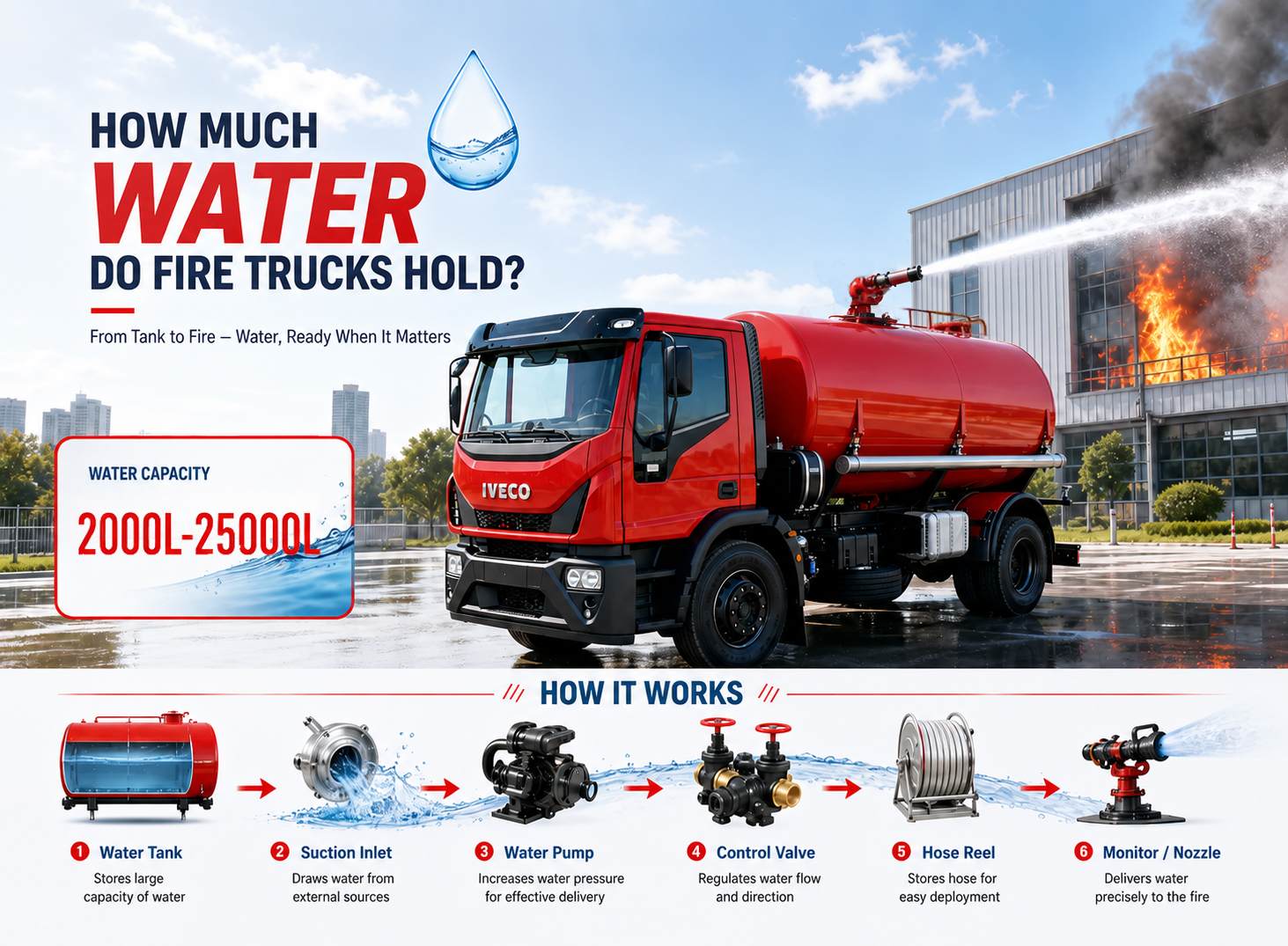
Berapa banyak air yang boleh dibawa oleh sebuah trak bomba? Ini ialah salah satu soalan pertama yang dihadapi oleh pelanggan kami apabila memilih trak bomba. Tiada satu angka tetap — ia bergantung pada jenis kenderaan, kapasiti casis, tujuan reka bentuk, dan peraturan serantau, bermula daripada unit tugas ringan berkapasiti 2,000 liter hingga trak bomba industri berkapasiti 25,000 liter. Namun, tangki yang lebih besar tidak semestinya bermaksud prestasi yang lebih baik;kenderaan pemadam kebakaran kapasiti tangki air mestilah dipadankan dengan betul dengan kadar aliran pam, kadar pelepasan monitor, dan kapasiti casis untuk memberikan hasil pemadaman kebakaran yang berkesan. Artikel ini bermula dengan asas kapasiti tangki air trak bomba, menganalisis julat simpanan biasa untuk jenis kenderaan yang berbeza, mengkaji faktor utama yang mempengaruhi reka bentuk tangki, dan memberikan panduan pembelian yang praktikal. Perkara Utama: Kapasiti tangki air trak bomba biasanya berada dalam julat 2,000 hingga 25,000 liter Jenis trak bomba yang berbeza mempunyai kapasiti tangki yang berbeza Tangki yang lebih besar tidak bermaksud keupayaan pemadaman kebakaran yang lebih baik Kapasiti tangki mesti dipadankan dengan aliran pam, aliran monitor, dan kapasiti casis Pemadaman kebakaran industri biasanya memerlukan tangki besar, manakala pemadaman kebakaran perbandaran mengutamakan kebolehgerakan » I. Tiga Jenis Asas Tangki Air Trak Bomba Trak Pam:Ini ialah trak bomba perbandaran yang paling biasa. Ia bergantung terutamanya pada pili bomba untuk bekalan air dan membawa kira-kira 1,900–3,800 liter air di atas kenderaan untuk serangan awal. Teras kenderaan ini ialah pam, bukan tangki — ia direka untuk menghantar air bertekanan selepas disambungkan kepada pili bomba. Trak Tangki (Pembawa Air):Kenderaan ini dikhususkan untuk mengangkut jumlah air yang besar, dengan kapasiti tangki biasanya melebihi 11,400 liter. Ia memainkan peranan penting di kawasan luar bandar dan terpencil yang tidak mempunyai pili bomba, dengan mengangkut air dari sumber air ke lokasi kebakaran untuk digunakan oleh trak pam. Trak Pam-Tangki:Kenderaan ini menggabungkan fungsi pengepaman dan pengangkutan air dalam satu unit. Ia boleh melepaskan air untuk pemadaman kebakaran serta membekalkan kenderaan lain. Kapasiti tangki biasanya berada antara 5,700 hingga 11,400 liter, menjadikannya penyelesaian serba guna untuk jabatan bomba. » II. Berapa Banyak Air Yang Boleh Dibawa Oleh Jenis Trak Bomba Yang Berbeza? Jenis Trak Bomba Kapasiti Tangki Biasa Aplikasi Utama Trak bomba tugas ringan 2,000–3,000 L Tindak balas pantas bandar, serangan awal Trak pam perbandaran 3,000–6,000 L Pemadaman kebakaran perbandaran, kebakaran struktur Trak pam tugas sederhana 6,000–10,000 L Tugas gabungan bandar dan industri Trak pam tugas berat 10,000–15,000 L Operasi lanjutan, tindak balas jarak jauh Trak bomba industri 15,000–25,000 L Pemadaman kebakaran minyak, bahan kimia, perlombongan » III. Bagaimanakah Sistem Air Trak...
Perincian
Sila baca selanjutnya, terus berhubung, langgan, dan kami mengalu-alukan anda untuk berkongsi pendapat anda.

 Rangkaian IPv6 disokong

 Melayu
 English
 français
 Deutsch
 русский
 italiano
 español
 português
 Nederlands
 العربية
 日本語
日本語 한국의
한국의 Türkçe
 ไทย
ไทย Tiếng Việt
 Indonesia
  中文
中文 қазақ
қазақ Filipino
 မြန်မာ
 српски